
Article: Your Sauna
Your Sauna
What to Consider When Buying a Sauna
Adding a sauna to your home or backyard can transform an ordinary space into a relaxing personal retreat. Whether you picture yourself unwinding after a long day, warming up after spending time outdoors, or simply creating a peaceful place to disconnect, today's saunas come in a wide variety of sizes, styles, and heating systems.
But before choosing one based on appearance alone, consider the type of sauna, indoor versus outdoor placement, size, heater, electrical requirements, materials, insulation, climate, maintenance, and installation. The right sauna should fit both your space and the experience you want to create.
1. Start With the Type of Sauna
One of your first decisions is what kind of sauna experience you prefer.
Traditional Saunas
Traditional saunas heat the room using a sauna heater, often combined with sauna stones. They operate at relatively high air temperatures and provide the classic sauna environment many people associate with Nordic-style sauna bathing.
Depending on the heater and manufacturer's instructions, water may be added to heated sauna stones to temporarily increase humidity and create steam.
Best for: People who want the classic high-temperature sauna experience.
Infrared Saunas
Infrared saunas work differently. Instead of primarily heating the surrounding air to the same temperatures associated with traditional saunas, infrared heating elements deliver radiant heat toward the occupants.
They generally operate at lower air temperatures, which some people find more comfortable.
Best for: People who prefer a gentler-feeling heat or don't want the higher room temperatures of a traditional sauna.
Wood-Burning Saunas
A wood-burning sauna provides a more traditional and rustic experience. Rather than relying on an electric heater, you build and maintain a fire.
This can be particularly appealing for a detached outdoor sauna, cabin, or property where the ritual of building the fire is part of the experience.
Best for: Outdoor settings and people who enjoy a traditional wood-fired atmosphere.
Electric Saunas
Electric sauna heaters provide convenient temperature control without requiring you to maintain a wood fire.
They're popular for both indoor and outdoor installations and are available in numerous sizes to accommodate different sauna rooms.
Best for: Homeowners looking for convenience and straightforward temperature control.
2. Indoor or Outdoor?
Where you put your sauna will significantly influence what you should buy.
Indoor Saunas
Indoor saunas can work well in bathrooms, basements, home gyms, wellness rooms, and other appropriately prepared spaces.
Installation needs can include electrical service, ventilation, flooring, moisture management, and adequate clearances, depending on the sauna.
Outdoor Saunas
Outdoor saunas can become beautiful features in a backyard wellness area.
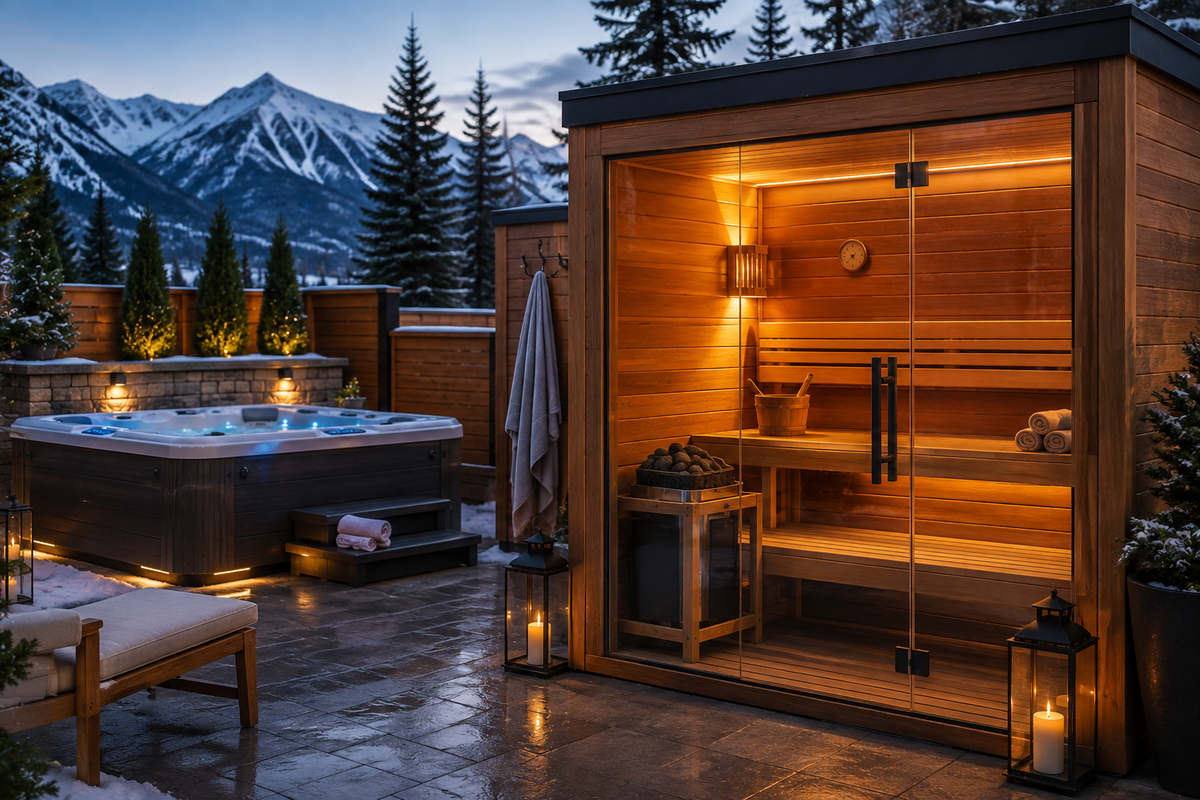
Cabin, barrel, cube, and other architectural designs can create a destination within your outdoor space. An outdoor sauna can pair especially well with a hot tub, cold plunge, outdoor shower, privacy screens, and comfortable seating.
If you're buying an outdoor sauna, make sure the particular model is designed for outdoor installation and suitable for your climate.
3. Choose the Right Size
Think about how many people will actually use the sauna.
A compact one- or two-person sauna may be perfect for personal relaxation and smaller spaces. Larger models can accommodate couples, families, or friends.
But bigger isn't automatically better.
A larger sauna requires more space and generally more heating capacity. If you'll usually use it alone or with one other person, you may prefer the coziness and efficiency of a smaller model.
Measure your available space carefully and remember to account for door clearance, electrical connections, ventilation, and access around the sauna.
4. Pay Attention to the Heater
The heater is the heart of a traditional sauna.
Heater capacity needs to match the size and design of the sauna room. An undersized heater may struggle to bring the room to the desired temperature, while simply installing the largest heater available isn't necessarily appropriate either.
The sauna manufacturer should specify the appropriate heater size or range for the enclosure.
For outdoor saunas in colder climates, proper heater sizing, insulation, and construction become particularly important.
5. Consider Your Climate
If you're installing a sauna outdoors, where you live matters.
A sauna sitting in a mild climate doesn't face the same conditions as one operating during a snowy mountain winter.
For colder areas, consider:
- Insulation and heat retention
- Wall and roof construction
- Door and window design
- Weather-resistant exterior materials
- Heater performance
- Roof protection
- Snow and moisture exposure
- Manufacturer temperature recommendations
A beautiful outdoor sauna isn't much use if it isn't designed to perform in your local conditions.
6. Look Closely at the Wood
Wood isn't simply decorative in a sauna.
The interior needs materials suitable for repeated exposure to heat and changing humidity levels. Depending on the manufacturer and model, saunas may use woods such as cedar, hemlock, spruce, aspen, or other sauna-appropriate species.
Different woods provide different appearances, aromas, textures, and characteristics.
Rather than choosing solely by color, look at the quality of the construction, benches, walls, fasteners, doors, and overall workmanship.
7. Think About Insulation and Heat Retention
Just as insulation matters when buying a hot tub, it matters when choosing a sauna.
Good construction helps keep heat where you want it—inside the sauna.
This can be especially important for an outdoor sauna exposed to cold temperatures and wind.
Doors and windows matter too. Large areas of glass can create a beautiful, modern appearance and open up a spectacular backyard view, but the overall sauna design still needs to provide appropriate heating performance.
8. Check the Electrical Requirements Before You Buy
Don't wait until delivery day to discover that your sauna requires electrical work.
Depending on the model, an electric sauna may require a particular voltage, amperage, dedicated circuit, or hardwired connection.
Infrared and traditional electric saunas can also have very different requirements.
Check the manufacturer's specifications before purchasing and have required electrical work completed according to applicable codes and manufacturer instructions.
9. Consider Ventilation
Proper ventilation is an important part of sauna design.
Ventilation helps manage fresh-air exchange and supports the sauna's intended heating environment. Requirements differ depending on the sauna, heater, room design, and installation.
Follow the manufacturer's ventilation instructions rather than assuming that a tightly sealed room is automatically better.
10. Think About the Seating Layout
The bench layout can make a major difference in how comfortable your sauna feels.
Consider:
Do you want to sit upright or stretch out?
If you enjoy lying down, make sure the benches are long and wide enough. If several people will regularly use the sauna together, look carefully at usable seating space rather than relying only on the advertised capacity.
In traditional saunas, different bench heights can also provide different heat experiences because warmer air rises.
11. Consider Windows and the View
For an outdoor sauna, windows can completely change the experience.
Imagine sitting inside a warm sauna while looking across your garden, watching snow fall, or enjoying a mountain or lake view.
Full-glass fronts and larger windows can create a dramatic modern appearance, while smaller windows provide more privacy and a traditional feel.
Think about privacy, heat performance, placement, and the view when deciding how much glass you want.
12. Look at Controls and Convenience Features
Modern saunas can offer much more than a heater and wooden bench.
Depending on the model, available features may include:
- Digital temperature controls
- Timers
- Interior lighting
- LED or chromotherapy-style lighting
- Bluetooth or audio systems
- Wi-Fi or app-based controls
- Ergonomic backrests
- Multiple bench levels
- Glass doors
- Accessory shelves
These features can make the experience more enjoyable, but don't pay for technology you'll never use.
Prioritize construction, heater quality, comfort, and proper installation first.
13. Don't Forget Maintenance
Saunas are relatively straightforward to maintain, but they still require care.
Keep benches and interior surfaces clean according to the manufacturer's recommendations, allow the sauna to dry properly after use, and periodically inspect the heater, stones where applicable, doors, hardware, and ventilation.
Outdoor models may also require exterior maintenance depending on the material and climate.
Following the manufacturer's care instructions can help protect both the appearance and performance of your sauna.
14. Compare the Warranty
Before purchasing, look at what's actually covered by the warranty.
The sauna enclosure, heater, controls, infrared heating elements, electrical components, and other parts may each have different coverage periods.
Also consider whether replacement parts and service are readily available.
A sauna is a long-term addition to your home, so manufacturer support deserves consideration alongside price and appearance.
Traditional or Infrared: Which Should You Choose?
This is one of the most common decisions sauna shoppers face.
Choose a traditional sauna if you want higher air temperatures, sauna stones, and the classic sauna experience.
Consider an infrared sauna if you prefer radiant heat and generally lower room temperatures.
A wood-burning sauna may be especially appealing if you want an authentic, rustic outdoor experience, while an electric traditional sauna offers classic heat with greater everyday convenience.
There isn't one type that's best for everyone.
The best sauna is the one you'll enjoy using regularly.
Create a Complete Backyard Wellness Retreat
A sauna can be impressive on its own, but it can become even more inviting when it's part of a larger outdoor wellness area.
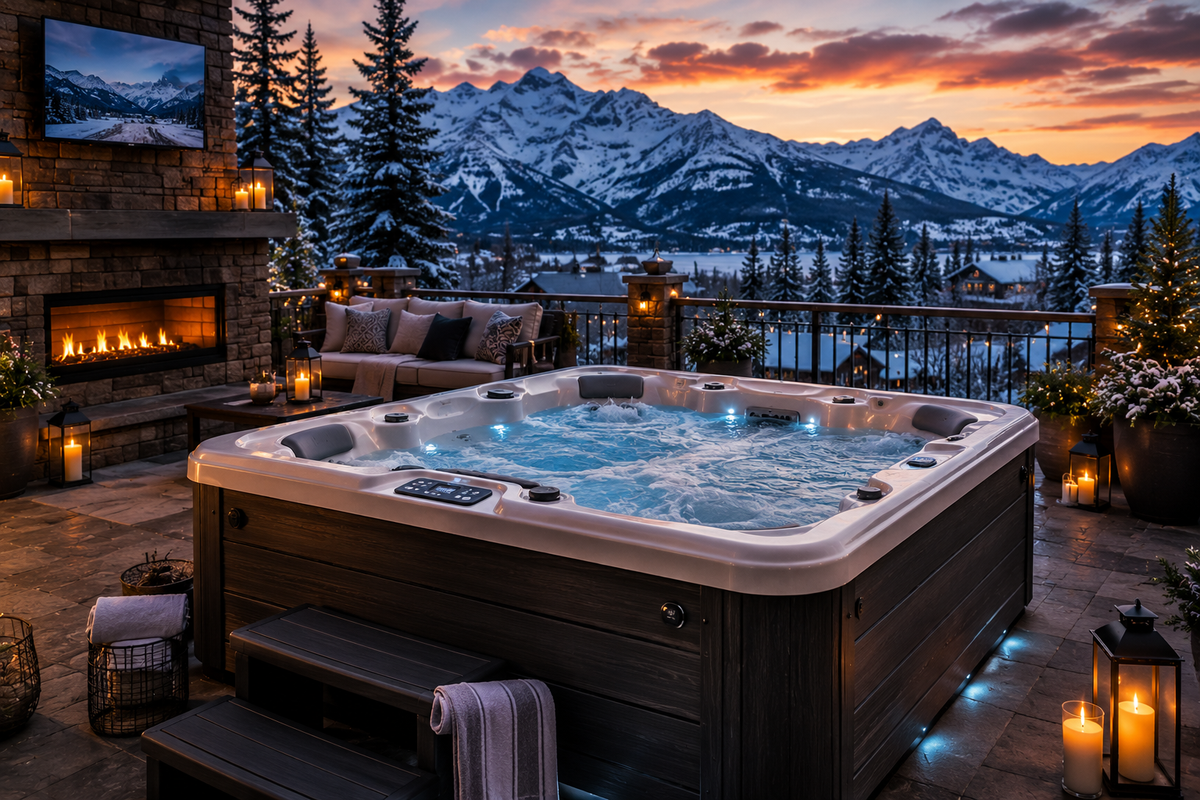
Consider pairing your sauna with a hot tub for soaking, a cold plunge for cooling down, an outdoor shower, privacy screens, comfortable chaise lounges, outdoor lighting, planters, and a fire feature.
The result can be a backyard designed not just for entertaining—but for slowing down.
Find the Sauna That Fits Your Lifestyle
Before purchasing your sauna, consider the heating method, indoor or outdoor placement, capacity, heater size, climate, construction, insulation, electrical requirements, ventilation, seating, maintenance, and warranty.
Don't choose based solely on appearance or the highest temperature advertised. Think about where the sauna will go, who will use it, and the type of experience you want every time you open the door.
Whether you're looking for a compact infrared sauna, a traditional indoor sauna, or a beautiful outdoor sauna overlooking your backyard, the right choice can create a relaxing space you'll look forward to using throughout the year.
Explore the saunas and outdoor wellness collection at LuxLiving-USA and create a personal retreat designed around the way you want to relax and enjoy your outdoor space.

Leave a comment
This site is protected by hCaptcha and the hCaptcha Privacy Policy and Terms of Service apply.