
SMOKERS
What to Look for When Buying a Smoker
There is something special about slow-smoked food. From tender brisket and fall-off-the-bone ribs to chicken, pork, fish, and even vegetables, a smoker can bring rich flavor and a whole new style of cooking to your backyard. But with so many types, sizes, fuel sources, and features available, how do you know which smoker is right for you?
Before choosing a smoker, think about what you want to cook, how involved you want to be in the cooking process, how many people you normally feed, and how much outdoor space you have. Here's what to consider before you buy.
1. Start With the Type of Smoker
One of the biggest decisions is how you want to fuel your smoker. Each type offers a different cooking experience.
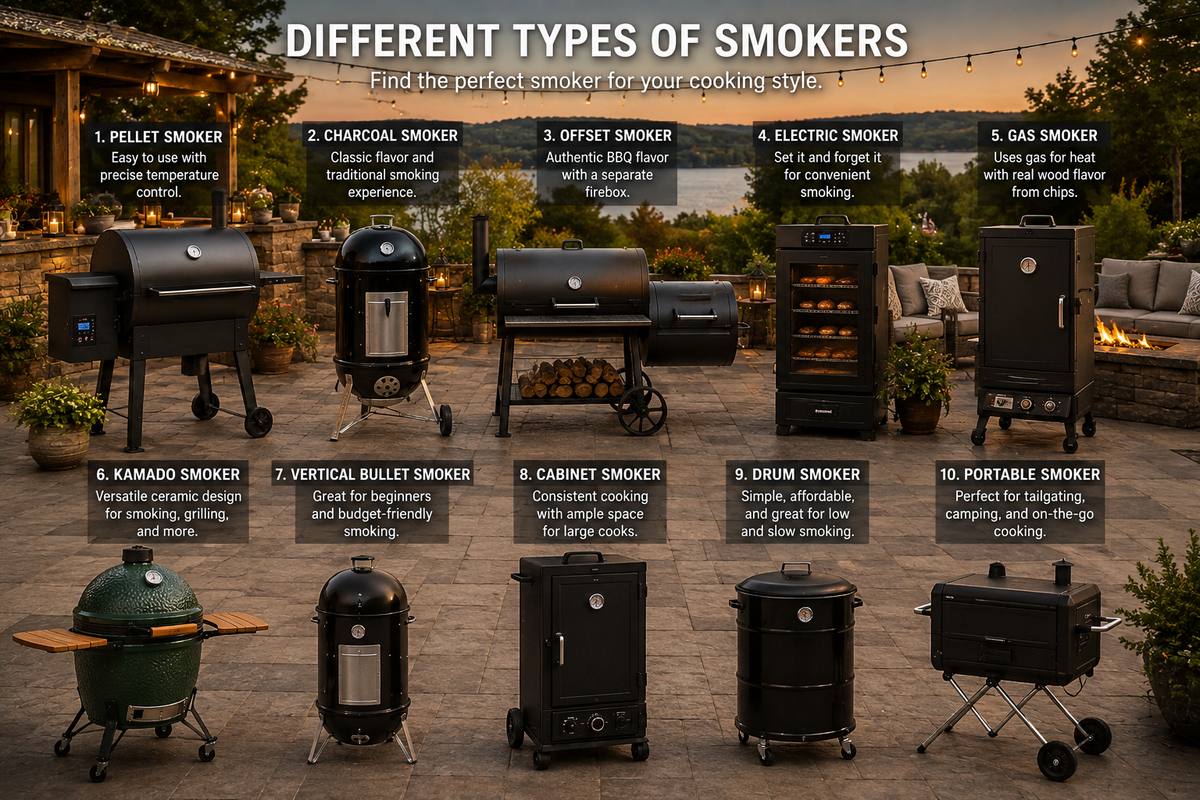
Pellet Smokers
Pellet smokers burn compressed wood pellets and typically use electronic temperature controls to maintain the desired heat. They're a popular choice for people who want authentic wood-fired flavor without constantly tending a fire.
Best for: Convenience, long cooks, beginners, and anyone who wants more precise temperature control.
Charcoal Smokers
Charcoal smokers offer the traditional barbecue experience and can produce deep, smoky flavor. They require more attention to temperature, airflow, and fuel than many pellet or electric models.
Best for: BBQ enthusiasts who enjoy being involved in the cooking process and experimenting with charcoal and wood.
Offset Smokers
An offset smoker has a separate firebox positioned beside the main cooking chamber. Smoke and heat travel from the firebox through the cooking chamber before exiting through the chimney.
These smokers can deliver an authentic barbecue experience but generally require more fire management and practice.
Best for: Serious BBQ enthusiasts who enjoy traditional smoking and don't mind tending the fire.
Electric Smokers
Electric smokers prioritize simplicity. Set the temperature, add your food and wood chips as directed, and let the smoker do much of the work.
Best for: Beginners, smaller spaces, and cooks who value convenience over traditional fire management.
Gas Smokers
Gas smokers generally use propane or natural gas to create heat while wood chips or chunks provide smoky flavor.
Best for: People who want relatively simple temperature management combined with traditional smoke flavor.
2. Consider the Cooking Capacity
Bigger isn't automatically better.
If you're mainly smoking dinner for two to four people, an enormous smoker may take up unnecessary patio space and use more fuel than you need. If you regularly entertain, cook multiple racks of ribs, smoke large briskets, or prepare food for parties, additional cooking capacity can be extremely valuable.
Look beyond the smoker's outside dimensions. Check the actual cooking area, number and position of racks, and the amount of usable vertical space.
Think about what you'll cook most often. A smoker that easily handles burgers and chicken pieces may not necessarily have the space or configuration you want for several racks of ribs or a large brisket.
3. Look for Good Temperature Control
Smoking is all about low, consistent heat over a long period of time, making temperature management one of the most important features to consider.
Look for a smoker that allows you to monitor and adjust cooking temperatures without unnecessary difficulty. Depending on the model, features may include built-in temperature gauges, digital controllers, meat probes, adjustable vents, or smart temperature monitoring.
More advanced smokers may even offer Wi-Fi or Bluetooth connectivity, allowing you to check temperatures from your phone.
4. Pay Attention to Construction
A smoker is an outdoor appliance, so construction matters.
Look for a solid cooking chamber, durable grates, quality hinges and handles, and materials designed to withstand repeated heating and cooling. A well-insulated or heavier cooking chamber can also help maintain more consistent temperatures, particularly when you're cooking in colder or windy weather.
If the smoker will remain outside, consider how well its exterior materials and finish will stand up to your climate.
5. Think About How Much Work You Want to Do
This is one of the most important questions shoppers sometimes overlook.
Do you want to manage the fire—or do you want the smoker to manage it for you?
Some people love tending charcoal or wood, adjusting vents, watching temperatures, and perfecting their technique. For them, managing the smoker is part of the experience.
Other people want to put a brisket on in the morning, set a temperature, and spend the rest of the day enjoying their backyard.
Neither approach is better. They're simply different.
If you want convenience, consider a pellet, electric, or other digitally controlled smoker. If mastering fire and smoke sounds like part of the fun, charcoal or offset smoking may be more rewarding.
6. Check the Temperature Range
Don't assume you'll only use your smoker for traditional low-and-slow barbecue.
Some smokers can operate across a wider temperature range, giving you the ability to prepare many different foods and potentially grill, roast, bake, or sear depending on the particular model.
A wider temperature range can make your smoker a much more versatile addition to your outdoor cooking area.
7. Look at Cleaning and Maintenance
Nobody wants to spend hours cleaning after spending hours cooking.
Before purchasing, look at how the smoker handles grease, ash, drippings, and leftover fuel. Removable grease trays, ash-management systems, accessible cooking grates, and easy-to-reach interiors can make regular maintenance considerably easier.
A smoker that's easy to clean is a smoker you're more likely to use.
8. Consider Useful Features and Accessories
Extra features aren't necessary for great barbecue, but the right ones can make smoking considerably more convenient.
Depending on the smoker, useful features may include:
- Digital temperature controls
- Built-in meat probes
- Wi-Fi or Bluetooth monitoring
- Multiple cooking racks
- Side shelves or prep areas
- Storage cabinets or shelves
- Warming racks
- Wheels for easier movement
- Interior lighting
- Pellet monitoring
- Easy-access ash and grease systems
- Smoker covers
Focus on features you'll actually use rather than simply choosing the smoker with the longest feature list.
9. Don't Forget Your Available Space
Measure before you buy.
Consider not only the smoker's dimensions but also the room required to open the lid or doors, access the firebox or pellet hopper, prepare food, move around the smoker, and maintain appropriate clearance from combustible materials.
Always follow the manufacturer's installation and clearance requirements for the specific smoker you purchase.
10. Compare the Warranty and Manufacturer Support
A smoker is an investment, particularly when you're purchasing a premium model.
Before deciding, compare warranty coverage and understand which components are included and for how long. Burner systems, cooking chambers, electronics, controllers, igniters, and other components may have different warranty periods.
Availability of replacement parts and manufacturer support can also become important several years after your purchase.
Which Smoker Is Right for You?
The right smoker comes down to your cooking style.
If convenience is your top priority, a pellet or electric smoker may be an excellent fit. If you love traditional barbecue and want more control over your fire, consider charcoal or an offset smoker. If you want straightforward heat control without relying on electricity for the primary heat source, a gas smoker may deserve a closer look.
And if you're still deciding, ask yourself one simple question:
Do I want smoking to be an easy way to cook—or do I want tending the smoker to become part of the hobby?
Your answer can quickly narrow down your choices.
Bring Real BBQ Flavor to Your Backyard
A smoker can add an entirely new dimension to your outdoor cooking experience. Brisket, ribs, pulled pork, chicken, sausage, seafood, vegetables, and countless other foods take on a completely different character when they're cooked slowly with smoke and patience.
Whether you're new to smoking or ready to upgrade your current setup, focus on fuel type, cooking capacity, temperature control, construction, ease of use, cleaning, features, and warranty rather than choosing based on appearance alone.
Explore the smokers and outdoor cooking products at LuxLiving-USA and find the setup that fits the way you want to cook, entertain, and enjoy your backyard.

Leave a comment
This site is protected by hCaptcha and the hCaptcha Privacy Policy and Terms of Service apply.